
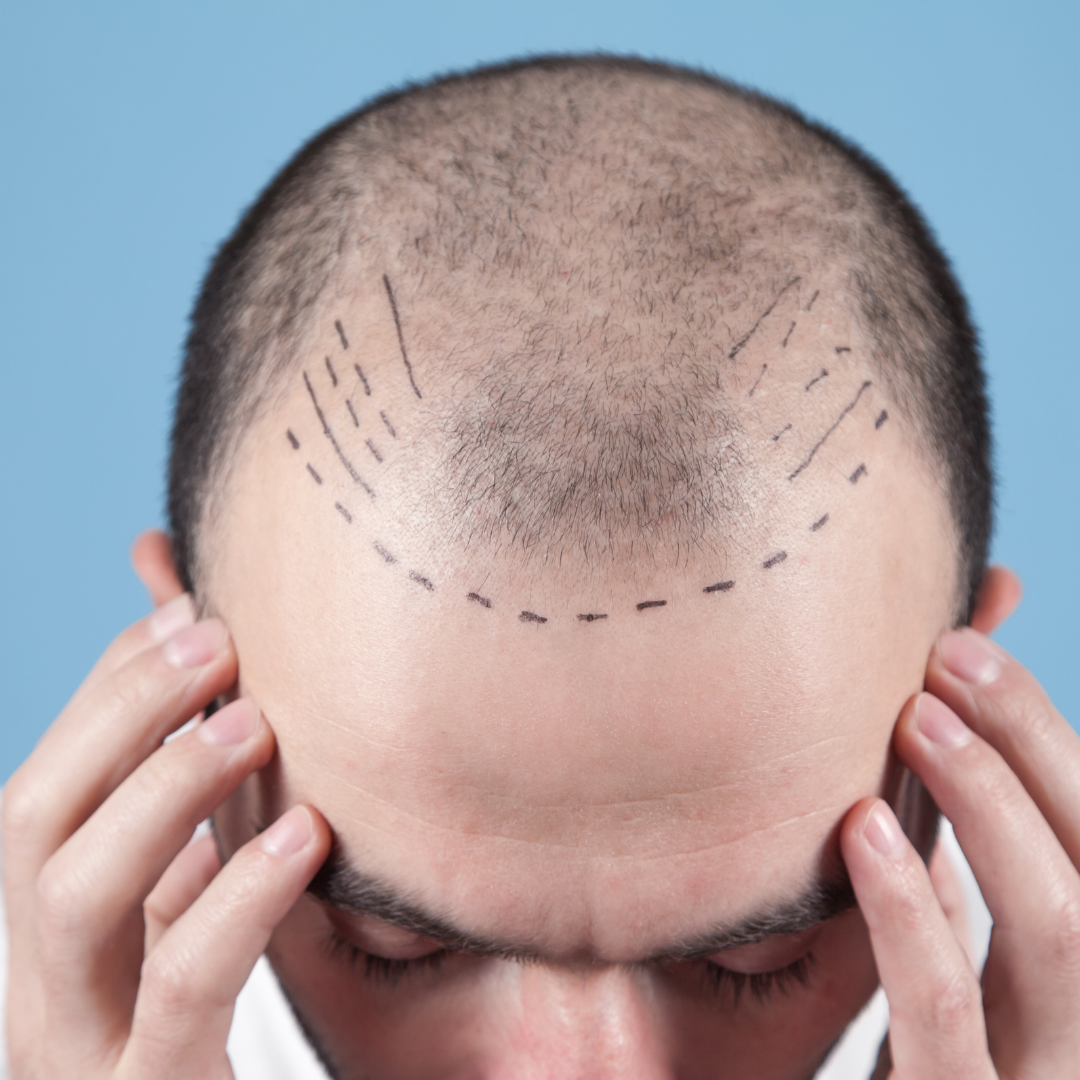
FUE vs DHI in Turkey: Which Hair Transplant Technique Is Right for You?
Hair transplant techniques are often compared as though one must be better than the other. In reality, the right approach depends on the individual patient.
Patients researching a hair transplant in Turkey often encounter the same question: FUE or DHI?
Both techniques involve transplanting individual follicular units, but the way grafts are implanted — and the situations in which each approach may be considered — can differ.
Factors such as your pattern of hair loss, donor capacity, the area being restored, existing hair and treatment goals should all be assessed before deciding which technique may be appropriate.
This guide compares FUE vs DHI to help you understand the differences before discussing your options with a hair transplant specialist.
What Is FUE Hair Transplant?
FUE – Follicular Unit Extraction is a hair transplant technique in which individual follicular units are extracted from the donor area, usually at the back or sides of the scalp.
The harvested follicles are then prepared for transplantation into areas affected by hair loss.
Unlike older strip-based techniques, FUE does not involve removing a linear strip of scalp. Instead, follicles are extracted individually, leaving small extraction points across the donor area.
When May FUE Be Considered?
FUE may be considered when:
- A relatively broad area requires restoration
- The hairline, temples or crown need treatment
- A patient wishes to avoid a linear donor scar
- The donor area can provide an appropriate number of grafts
- The surgeon determines that FUE suits the patient’s hair loss pattern and goals
The number of grafts required and the achievable coverage vary considerably between patients.
For this reason, treatment planning should begin with an assessment of both the recipient area and available donor hair.
What Is DHI Hair Transplant?
DHI – Direct Hair Implantation also involves extracting individual follicular units.
The principal difference is in the implantation stage.
With DHI, an implanter device is used to place prepared grafts into the recipient area while allowing control over factors such as placement, depth, direction and angle.
DHI may be considered for particular hair restoration requirements, but it is not automatically superior to FUE for every patient.
When May DHI Be Considered?
Depending on the individual case, DHI may be considered when:
- Treatment involves a more targeted area
- Detailed placement is particularly important
- Existing hair needs to be considered during implantation
- The surgeon wants precise control over graft placement
- The patient’s donor area and hair loss pattern make the technique appropriate
The most suitable approach depends on your anatomy and treatment objectives rather than the name of the technique alone.
FUE vs DHI: What Is the Difference?
FUE and DHI share several principles, including the individual extraction of follicular units.
The main differences relate to how the recipient area is prepared and how the grafts are implanted.
Implantation Method
With conventional FUE transplantation, recipient sites are generally prepared before graft placement.
With DHI, an implanter device is used during the placement stage.
Neither method should be selected simply because one is described as newer or more advanced.
Coverage and Treatment Area
FUE can be suitable when broader areas of hair loss require treatment.
DHI may be considered when detailed placement within particular areas is a priority.
However, the appropriate technique depends on the number of grafts available, the size of the treatment area and the patient’s existing hair.
Density
It is misleading to assume that one technique always produces greater density.
The density that can safely and realistically be achieved depends on factors including:
- Donor capacity
- Existing hair
- Recipient area
- Graft availability
- Hair characteristics
- Surgical planning
A successful hair transplant should aim for a result that is appropriate for the patient’s available donor resources rather than simply pursuing the highest possible graft density.
Shaving Requirements
The amount of shaving required can vary according to the technique, treatment area and individual surgical plan.
Some DHI cases may allow more limited shaving, while FUE commonly involves shaving the donor area to facilitate extraction.
This should be discussed during consultation rather than assumed before assessment.
Procedure Time
Treatment time depends on the number of grafts, the area being restored and the implantation approach.
DHI can involve a detailed implantation process, while larger FUE sessions may involve substantial numbers of grafts.
Therefore, procedure length should be estimated individually.
Is FUE or DHI Better?
There is no universal answer.
The better question is:
Which technique is more appropriate for your hair loss pattern, donor area and objectives?
A recommendation should be based on medical assessment rather than choosing a technique because it appears more advanced or popular online.
Hair Loss Pattern
Patients with different patterns of hair loss may require different treatment strategies.
A relatively small area of thinning, for example, presents different planning considerations from extensive frontal and crown hair loss.
Donor Area
Your donor area is one of the most important factors in hair transplant planning.
The available number, distribution and characteristics of suitable follicles influence what can realistically be achieved.
This is why a responsible treatment plan considers not only where hair is needed, but also how the donor area can be preserved for the future.
Hairline Design
A natural-looking hair transplant involves much more than filling an empty area with grafts.
Hairline position, shape, direction and density all contribute to the final appearance.
The design should also consider how the result may look as the patient ages and whether existing hair loss may continue.
Can FUE and DHI Be Combined?
In selected cases, different implantation approaches may be considered within an individual treatment plan.
The objective should not be to combine techniques unnecessarily.
Instead, the surgeon should determine which approach is appropriate for each area based on the patient’s anatomy, donor resources and desired outcome.
If you are unsure which technique may suit you, you can also read our detailed guide to hair transplant in Turkey to understand treatment planning, recovery and the factors worth comparing before choosing a clinic.
What Determines a Natural-Looking Hair Transplant?
Patients frequently focus on whether FUE or DHI produces the most natural result.
In practice, the technique is only one part of the equation.
Important considerations include:
- Hairline design
- Direction and angle of implanted follicles
- Appropriate distribution of grafts
- Donor management
- Existing hair density
- Hair calibre and characteristics
- Long-term progression of hair loss
- Realistic treatment planning
A technically successful transplant should complement the patient’s existing features rather than create an obviously transplanted appearance.
Are Hair Transplant Results Permanent?
Transplanted follicles are generally selected from donor areas that are more resistant to the processes responsible for common pattern hair loss.
However, existing non-transplanted hair can continue to change over time.
Long-term planning should therefore consider both the transplanted area and the potential progression of hair loss.
Patients should approach hair transplantation with realistic expectations and understand that the final appearance cannot be judged during the early recovery period.
Hair Transplant Recovery After FUE or DHI
Recovery varies between patients and depends on the extent of treatment and the individual surgical plan.
During the early recovery period, temporary redness, swelling or small scabs around treated areas may occur.
Patients receive instructions on washing, sleeping position, physical activity and protecting the transplanted area.
The transplanted hairs may initially shed before subsequent growth develops.
Hair growth is gradual, so the appearance continues to change over the following months.
Your medical team should explain what to expect at each stage and when your progress should be reviewed.
FUE vs DHI in Antalya
Patients researching hair transplant Turkey may encounter clinics across several Turkish cities.
Clinic Phaselis is based in Antalya, on Turkey’s Mediterranean coast.
For international patients, treatment abroad requires more than arranging the procedure itself. Travel, accommodation, communication, treatment planning and post-procedure support all need to work together.
Clinic Phaselis provides a structured patient journey designed to support international patients before travelling, during their stay in Antalya and following their return home.
What Sets Clinic Phaselis Apart?
Choosing a hair transplant provider should involve evaluating the medical approach and patient journey rather than focusing only on marketing claims or price.
At Clinic Phaselis, the approach focuses on:
- Doctor-led treatment – hair transplant procedures are medically supervised and individually planned
- Personalised assessment – recommendations consider your hair loss pattern, donor capacity and goals
- Natural-looking planning – hairline design and follicle placement aim to complement your existing features
- FUE, Sapphire FUE and DHI options – the technique is selected according to individual suitability
- International patient support – guidance is available throughout the treatment journey
- Structured aftercare – patients receive post-treatment instructions and follow-up support after returning home
The objective is not simply to perform a transplant, but to develop an appropriate treatment plan based on what can realistically be achieved for each patient.
Questions to Ask Before Choosing FUE or DHI
Before deciding between techniques — or choosing a clinic — useful questions include:
- Who will assess my hair loss and donor area?
- Who will perform each stage of the procedure?
- Which technique is recommended for me and why?
- How many grafts may be appropriate?
- How will my donor area be preserved?
- How will my hairline be designed?
- What happens if my existing hair loss progresses?
- What aftercare will I receive after returning home?
- Who can I contact if I have concerns during recovery?
Clear answers to these questions can help you make a more informed comparison before choosing where to have treatment.
Frequently Asked Questions About FUE vs DHI
Is DHI Better Than FUE?
Not necessarily.
Both techniques can be appropriate depending on the patient. The choice should be based on your hair loss pattern, donor area, existing hair and treatment objectives.
Does DHI Look More Natural Than FUE?
Neither technique automatically produces a more natural result.
Natural appearance depends heavily on planning, hairline design, graft distribution, placement and the characteristics of the patient’s existing hair.
Which Is Better for a Large Area of Hair Loss?
FUE may be considered when broader areas require coverage, but the appropriate approach depends on donor availability and the individual treatment plan.
An assessment is necessary before determining how many grafts can safely be used.
Does DHI Heal Faster Than FUE?
Recovery varies between patients.
Differences in technique may influence the early recovery experience, but it is not appropriate to assume that every DHI patient will recover faster than every FUE patient.
Is FUE or DHI More Painful?
Hair transplantation is generally performed using local anaesthesia.
The experience varies between individuals, and temporary discomfort, sensitivity or tightness may occur during recovery.
Can FUE and DHI Be Used Together?
Different approaches may be considered within the same treatment strategy when clinically appropriate.
Your surgeon should explain whether there is any benefit to doing so in your particular case.
How Long Does It Take to See Hair Transplant Results?
Hair transplant results develop gradually.
Initial shedding can occur before new growth becomes visible, and the appearance continues to mature over subsequent months.
Your treatment team should provide a personalised recovery and growth timeline.
Not Sure Whether FUE or DHI Is Right for You?
You do not need to choose the technique yourself.
The appropriate starting point is an assessment of your hair loss pattern, donor area, existing hair and treatment goals.
You can request a free consultation with Clinic Phaselis to have your case reviewed and discuss which available hair transplant approach may be appropriate for you.
Your treatment recommendation should be based on what can realistically be achieved for your individual case — not simply on whether FUE or DHI is the more popular technique.